Oia Castle
Early morning for soft light
Positioned at the northern tip of the village, this ruin offers a panoramic view of the windmills and the caldera. Capture the architecture against the horizon.

Oia's whitewashed alleys and clifftop churches draw photographers from every continent. This guide maps the village's signature viewpoints and explains when light, crowds, and access align for clean compositions.
Quick answer
The most photogenic locations in Oia include the blue-domed churches of Firostefani viewpoint, the Byzantine castle ruins, and the caldera-facing pathways near Panagia Platsani. All are accessible without entrance fees, though morning arrivals between 06:30 and 09:00 deliver softer light and fewer tourists blocking sightlines. Sunset draws the largest crowds, particularly along the castle ramparts.
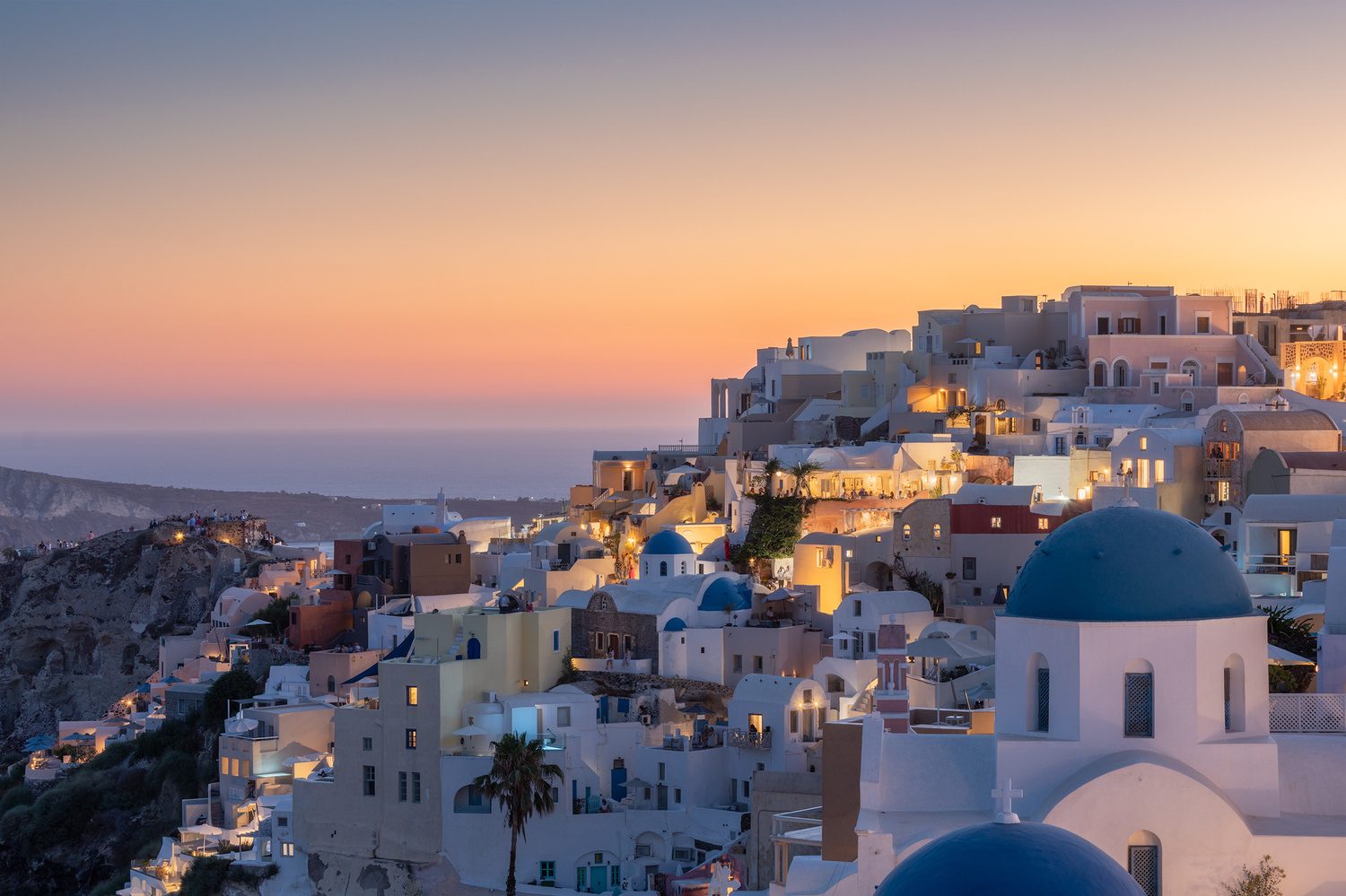
Oia occupies the northern tip of Santorini's caldera rim, where volcanic cliffs drop 300 meters into the Aegean. The village's postcard reputation rests on a handful of sightlines repeated across millions of travel images: cobalt church domes framed against whitewashed bell towers, cave houses carved into pumice slopes, and the wide-angle sweep from the castle toward Thirasia Island. Understanding where these compositions sit within the village's narrow lanes determines whether you leave with original work or another replica of someone else's shot. The blue-domed churches that anchor most Oia photography are not a single landmark but three separate structures scattered across the clifftop. The most photographed dome belongs to Agios Spyridonas, visible from the marble-paved lane above the caldera path. A second dome sits near Panagia Platsani, framing the caldera's southern curve. The third, less accessible, overlooks the old port stairs. Each requires different vantage points, and none permit interior access during peak visitor hours. Photographers working these locations compete for a limited number of clean angles, particularly when cruise ships dock in Fira and tour groups flood the village by mid-morning. The castle ruins at Oia's western edge offer the widest caldera panorama but present their own challenges. The stone platform fills an hour before sunset, and tripods are impractical in the crush. Morning light reverses the dynamic, illuminating the village while leaving the caldera in shadow—a tradeoff that favors architectural detail over seascape drama. Professional photographers working in Oia adapt to these constraints by shooting in multiple sessions, using early access to secure compositions that become impossible by noon. The village's public streets and viewpoints remain free to access year-round, but controlling the variables around light, crowd density, and weather separates functional documentation from deliberate image-making.
“The village's postcard reputation rests on a handful of sightlines repeated across millions of travel images.”
Early morning for soft light
Positioned at the northern tip of the village, this ruin offers a panoramic view of the windmills and the caldera. Capture the architecture against the horizon.
Early morning before crowds arrive
Located along the main pedestrian path, these iconic structures provide a classic composition of white walls and blue roofs. Framing the domes with the Aegean Sea in the background is a standard practice.
Early morning for clear vistas
Situated on the western edge of the settlement, these historic structures serve as a focal point for shots featuring the sea and village edge. Angle the camera to include the surrounding cliffside path.
Early morning for direct light
This bell tower stands out against the sky and offers a vertical composition for photographs. It is located centrally near the primary walking route.
The best arrival window is 06:30–09:00 to avoid peak cruise ship crowds and capture the best morning light. Planning your session during these early hours ensures access to popular viewpoints before the village becomes congested.
Mild, 17°C to 23°C. Comfortable for extended outdoor sessions.
These shoulder months offer temperate conditions and fewer visitors compared to mid-summer.
Warm to hot, 25°C to 29°C. Frequent intense sunlight.
Expect significant crowds throughout the day; early mornings are essential for clear shots.
—
Mid-week sessions further reduce the volume of visitors compared to weekends, providing more space for photography.
Verdict: The best time for photography is during the months of April or October, specifically within the 06:30–09:00 arrival window.
Oia is a public village, providing continuous access to its streets and viewpoints throughout the week. Visitors may explore these locations at any time of day or night.
Access to the public streets and viewpoints throughout Oia is free for all visitors. There are no official entrance fees for exploring these photo locations.
Verdict: A typical visitor pays 0 EUR for access to public photo spots, though professional photography services may carry separate costs.
Oia is located on the northern tip of Santorini at Oia 847 02, Greece. Most visitors arrive via the main road leading to the village entrance or by bus to the central terminal.
KTEL bus from Fira to Oia
Main road toward Oia (parking available at village perimeter)
Walk from Fira via the Caldera path
For the best experience, plan your visit for the 06:30–09:00 window to avoid peak cruise ship crowds and capture the best morning light.
Everything you need to know about oia photo spots
Public village streets and viewpoints are free to access, meaning you pay 0 EUR to explore. You may encounter private terraces that require reservations, but the iconic vistas remain largely open.
The best arrival window is 06:30–09:00 to capture the best morning light. Visiting during these hours helps you avoid peak cruise ship crowds.
Yes, the most iconic oia photo spots are located throughout the public walkways of the village. Simply wander through the stone paths to discover the famous blue domes and caldera views.
To minimize background visitors at your preferred Santorini viewpoints, arrive as early as possible. Planning your session during the early morning is the most effective strategy for clean compositions.
While our guide focuses on independent exploration, you can book a professional photographer to help you navigate the best oia photo spots efficiently. This ensures you receive high-quality images while learning the history of the village.
While tripods are not strictly banned in public spaces, they can be difficult to manage in narrow, busy alleys. It is advisable to be mindful of pedestrian traffic or consider hiring a professional who knows how to navigate these tight oia photo spots comfortably.